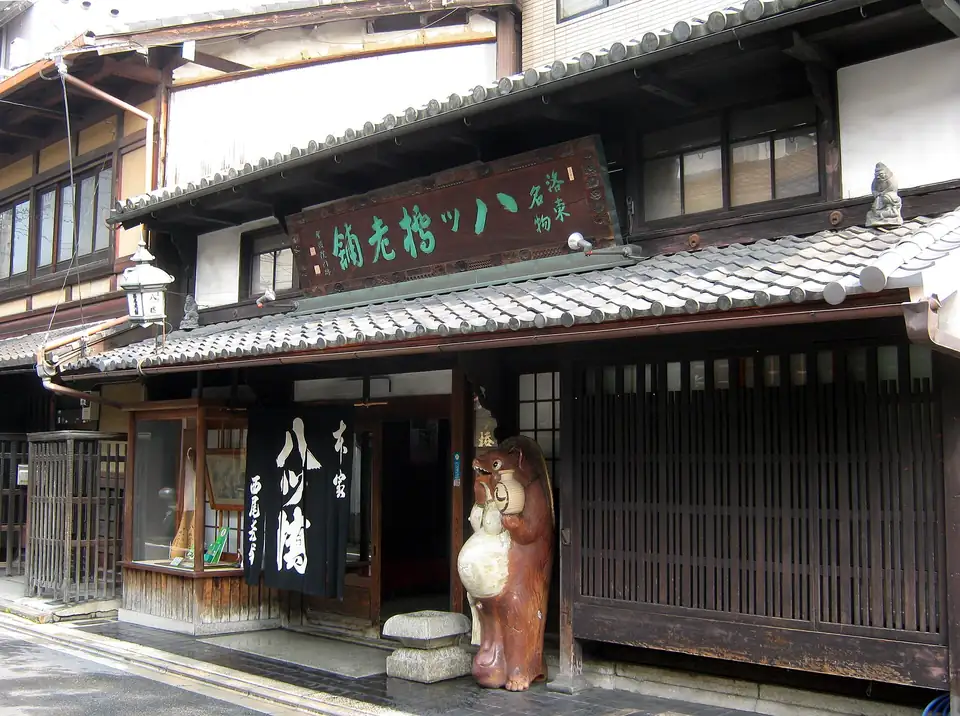
Honke Nishio Yatsuhashi (main shop)
In Japanese: 本家西尾八ッ橋 本店
Est. c. 1689by tradition
Honke Nishio Yatsuhashi is the main shop of a yatsuhashi maker near Shogoin Temple in Kyoto, said to date from 1689. Yatsuhashi are thin cinnamon-flavored sweets of rice flour. According to the family, the shop began as a teahouse serving rice cakes, and the third head named its baked sweet yatsuhashi in 1689. It sells the baked kind and soft nama yatsuhashi that wrap bean paste.
- What to try
- Baked yatsuhashinama yatsuhashi and bean-filled nama yatsuhashi
- Address
- 7 Shogoin Nishi-machi, Sakyo-ku, Kyoto
- Getting there
- About a 9-minute walk from Jingu-Marutamachi Station (Keihan Line)
- At the shop
- Take out
- Founded
- c. 1689 (by tradition)
- Era
- Edo period
- Food
- Wagashi
About Honke Nishio Yatsuhashi (main shop)
The business began as a teahouse that served white rice cakes and baked sweets to travelers. Tradition says the third head gave his flat baked sweet the name yatsuhashi in 1689. According to the family, the name recalls the eight-plank bridge of Yatsuhashi in Mikawa Province, known from The Tales of Ise. The twelfth head later added the step of curving the dough, which gave the sweet its present shape.12
Baked yatsuhashi have always been made with rice flour, and their curve keeps a ratio of one to two, height to width. Nama yatsuhashi wrap bean paste in a soft, unbaked dough. The shop began making them around the time of the 1964 Tokyo Olympics, and they now make up most of its sales. The two kinds are made on separate lines, and boxing and wrapping are done by hand.1
Inside the shop, a large gate door given by Shogoin Temple hangs on the left wall, with calligraphy by the senior monk (daiajari) Yusai Sakai above it. From New Year to Setsubun (early February), handmade mochibana (rice-cake blossoms) decorate the shop. Freshly made yatsuhashi can be sampled. The shop is take-out only; next door, Nishio Yatsuhashi no Sato serves meals and sweets with a garden view.23
It is about a 9-minute walk from Jingu-Marutamachi Station on the Keihan Line. Shogoin Temple and Kumano Shrine are nearby.34
History
- 1689
Tradition says the third head names the baked sweet yatsuhashi.
- 1964
Around the Tokyo Olympics, the shop begins making nama yatsuhashi.
At the shop
Photos2 photos
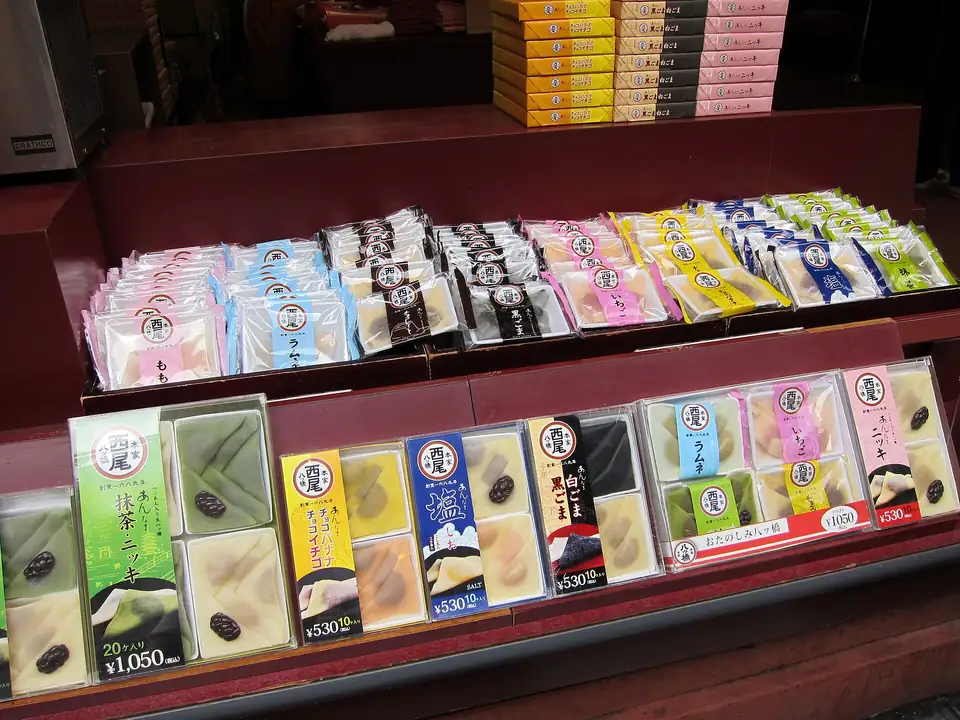
Packs of nama yatsuhashi on sale (taken in 2010)Photo: hslo · CC BY-SA 2.0 · Wikimedia Commons
Compiled by our editors from public sources. We warmly welcome corrections from the shop.
Nearby
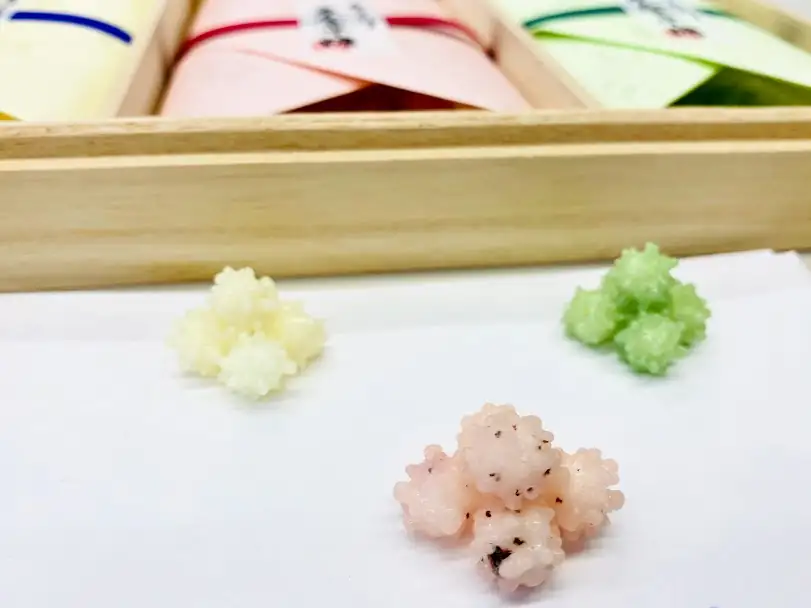
Same food
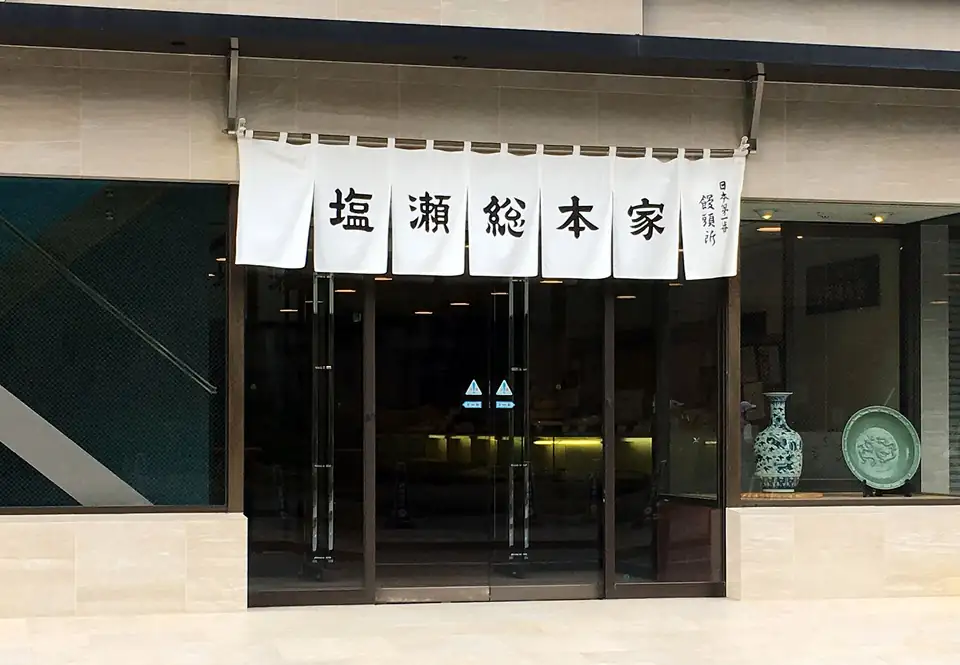 Est. c. 1349Shiose SohonkeShiose manju (steamed buns with yam and rice-flour dough)See this shop →
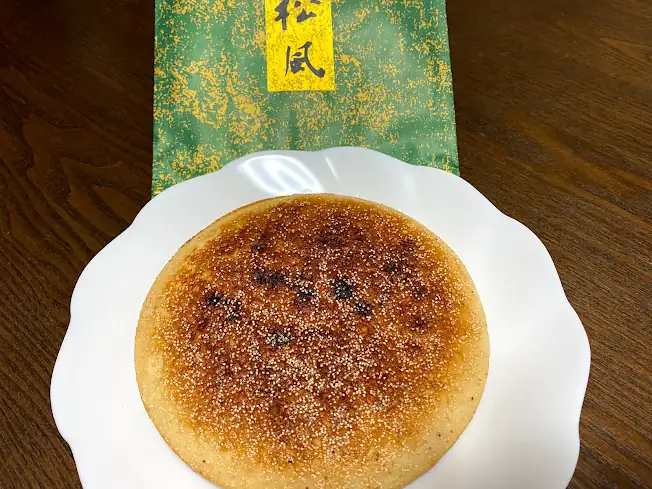 Est. c. 1421Kameya MutsuMatsukaze (baked miso cake)See this shop →
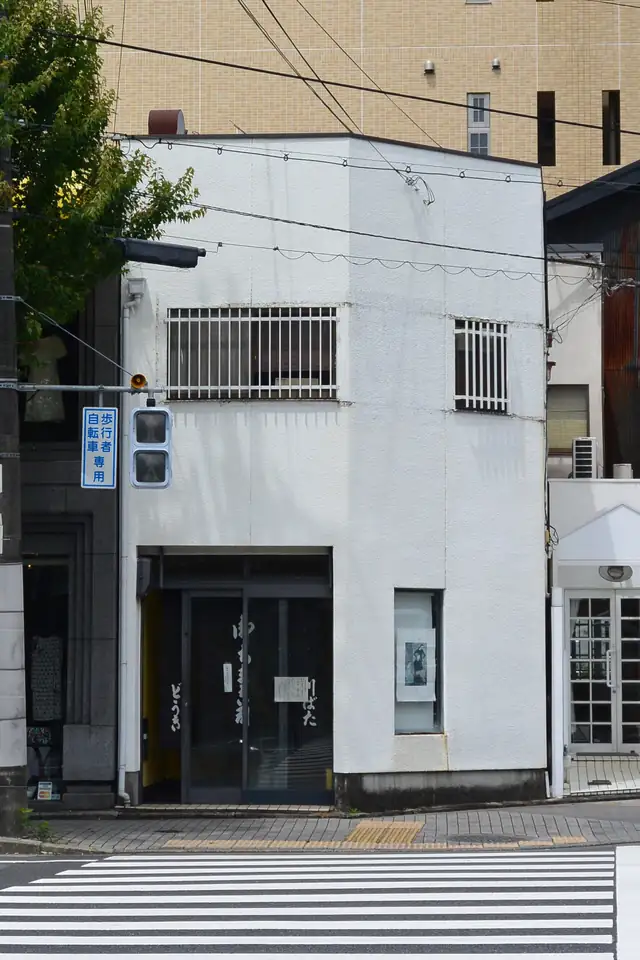 Est. 1503Kawabata DokiSuisen chimakiSee this shop →
 Est. c. 1569OsekimochiOseki mochi (plain and mugwort rice cakes topped with coarse bean paste)See this shop →
When this shop first opened
c. 1689 (by tradition)
337 years since.
- 1603The Edo shogunate begins
- 1689Founded
- 1774Kaitai Shinsho is published
- 2026Today
Each event on the timeline is checked against a source.
See sources
1603: 東京都都市整備局『東京の都市づくり通史』序章; 1774: 山口県文書館 解説資料「蘭学(解体新書)」