Story · 2026-11-21 · About 5 min read
Toshikoshi soba: five long-established soba shops in Kyoto and Tokyo
Eating soba on New Year’s Eve is said to have begun in the Edo period. This story follows five soba shops over 100 years old in Kyoto and Tokyo, including the places where nishin soba and ten-zaru began.
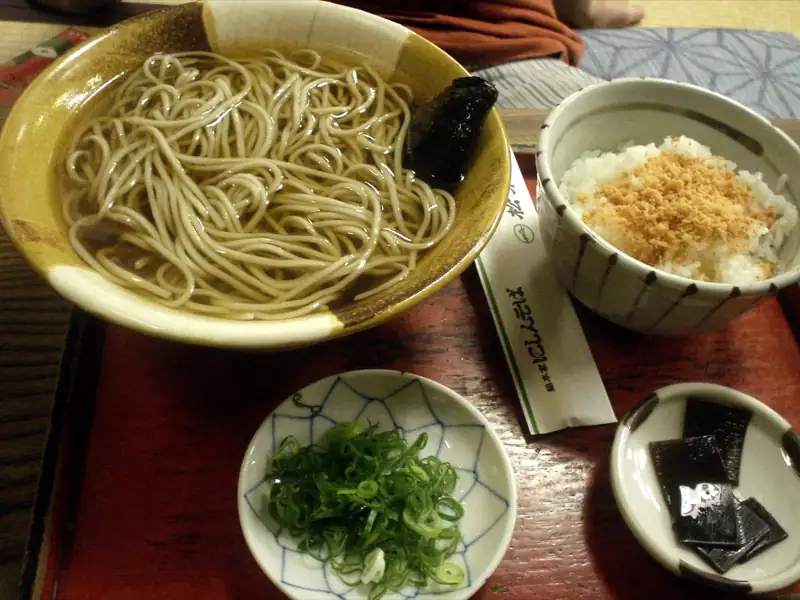
Soba on New Year’s Eve
Eating toshikoshi soba (buckwheat noodles “to cross into the new year”) on New Year’s Eve is said to have begun in the Edo period (1603–1868). According to Japan’s Ministry of Agriculture, Forestry and Fisheries, it was first one of the festive dishes served on the last night of the year.[1]
The long, thin noodles stand for a long life. Because soba breaks more easily than other noodles, it is also said to cut off the troubles of the past year. More than 60% of households in Japan are said to eat soba on New Year’s Eve today. There is no set time to eat it, but it is meant to be finished before the new year begins.[1]
This story visits five listed shops in Kyoto and Tokyo whose beginnings and signature dishes can be traced in sources.
Kyoto: Matsuba and nishin soba
Sohonke Nishin Soba Matsuba stands at the east end of Shijo Bridge, next to the Minamiza theater. Its first owner, Matsuno Yoemon, opened it as a soba shop in 1861 and named it Matsuba.[2,3]
Surrounded by mountains, Kyoto had little fresh seafood, so dried fish was a common food. According to the shop, migaki nishin (split, dried herring) was an important source of protein that kept well.[2]
In 1882, the second owner, Matsuno Yosakichi, began selling nishin soba: hot soba topped with this herring simmered sweet and savory. It spread as a Kyoto specialty, and the fifth generation runs the shop today. The shop also sells its simmered herring and herring wrapped in kelp. The soba is served in a light Kyoto-style broth.[2,3]
The shop is right by Gion-Shijo Station on the Keihan Line.[3]
Kyoto: Honke Tagoto, named for the moon in the rice terraces
Honke Tagoto was opened in 1868 by its first owner, Tokubei, on Sanjo in Kyoto. The main shop still stands on the same spot, facing the end of Shinkyogoku street where it meets Sanjo-dori. Tradition says Tokubei learned to make soba from the head priest of Daikoji Temple. The shop says its corner, where the Shinkyogoku entertainment street met the banking district of Sanjo, was so busy with carts and rickshaws that people nicknamed it “cart udon.”[4,5,6]
The name comes from tagoto no tsuki, the moon reflected in each small rice terrace in the hills of Sarashina in Shinshu (now Nagano). Shinshu was long a soba-growing area, and the first owner is said to have been moved by this view there.[4]
For many years it was a casual eatery with many kinds of dishes. In the late 1960s and early 1970s, the fifth owner trained at a soba shop in Tokyo and turned it into a soba specialist. The large back garden was later made smaller to add seats that look out on it. The shop describes its style as Kanto-style noodles in Kansai-style broth.[4]
Tokyo: Muromachi Sunaba and ten-zaru
Muromachi Sunaba in Nihonbashi Muromachi opened in 1869 under the name Kokucho Sunaba. It took its present name when the district was renamed after World War II.[7,8]
The shop is known as the birthplace of ten-zaru and ten-mori. To let people enjoy tempura soba even in hot weather, it served cold soba with a warm dipping broth holding a kakiage (mixed tempura fritter). The kakiage is made with shrimp and small scallops.[7,8]
There are two kinds of soba. Zaru is white soba made from flour of the buckwheat kernel’s core, bound with egg. Mori is made with 80 percent buckwheat flour. Hot soba, udon, rolled omelet and sweet bean soup with soba dumplings are also served.[7]
The shop is about a 3-minute walk from Kanda Station (JR) or Mitsukoshimae Station (Tokyo Metro). A small garden can be seen at the back of the dining room.[7,8]
Tokyo: Kanda Nishikicho Sarashina
Kanda Nishikicho Sarashina was founded in 1869. It is said to be the first branch permitted by the Sarashina house of Azabu Nagasaka, founded in 1789. By the mid-Meiji era (1868–1912), it is said to have supplied soba to the imperial household. A branch in Kanda-Nishikicho was granted to Horii Jotaro in the time of the sixth head of the Azabu house, and the second owner, Horii Kameo, was known for his skill at making soba.[9,10]
It serves white, firm sarashina soba. Its chilled soba topped with ginger tempura is a signature dish, and a flavored soba made with sarashina flour changes every week. The menu also has cold soba with hot dipping broths such as curry, or maitake mushroom and pork.[9,10]
The shop is on a side street in Kanda-Nishikicho 3-chome, about a 10-minute walk from Jimbocho or Ogawamachi Station.[9,10]
Tokyo: Kanda Yabusoba, from the Dangozaka line
In late Edo, a soba shop officially named Tsutaya stood on Dangozaka slope. Because its grounds held a bamboo grove, people called it Yabu soba (“bamboo-grove soba”). Its owner, Miwa Denjiro, came from a samurai family. He is said to have built a waterfall in the garden and lent guests cotton robes, which made the shop known across Edo.[12]
In 1880, the Kanda branch of this Yabu soba, in what was then Renjakucho (now Awajicho), was taken over from the Miwa family. That is the start of today’s Kanda Yabusoba. The Dangozaka main shop closed at the end of the Meiji era, while the Kanda shop carried on. The Chiyoda City Tourism Association introduces it as the head house of Yabu, one of the three main lines of Edo-style soba.[11,12]
The shop burned in the 1923 earthquake and was rebuilt about three months later. After a fire in 2013, it reopened on the same site in October 2014. It is a 2- to 3-minute walk from Awajicho Station.[11,12]
Before you go
Shops can be busy at the end of the year, and some close in the first days of January. Muromachi Sunaba, for example, lists January 1 to 4 as closing days (as given in the source). Check each shop’s own information for opening days and hours before you go.[7]
When these shops were founded
Where they are
Numbered from the oldest. Positions are approximate.
Shops in this story
- Est. 1861Sohonke Nishin Soba Matsuba (main shop)Nishin soba (herring soba) and simmered herringSee this shop →
- Est. 1868Honke Tagoto (main shop)Handmade sobaSee this shop →
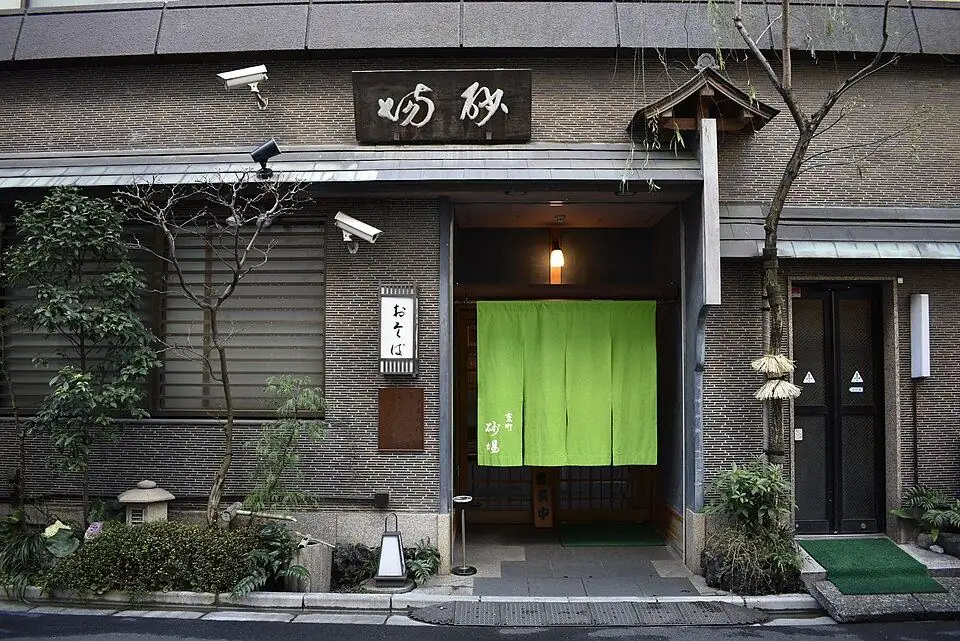 Est. 1869Muromachi Sunaba Nihonbashi (main shop)Ten-zaru and ten-moriSee this shop →
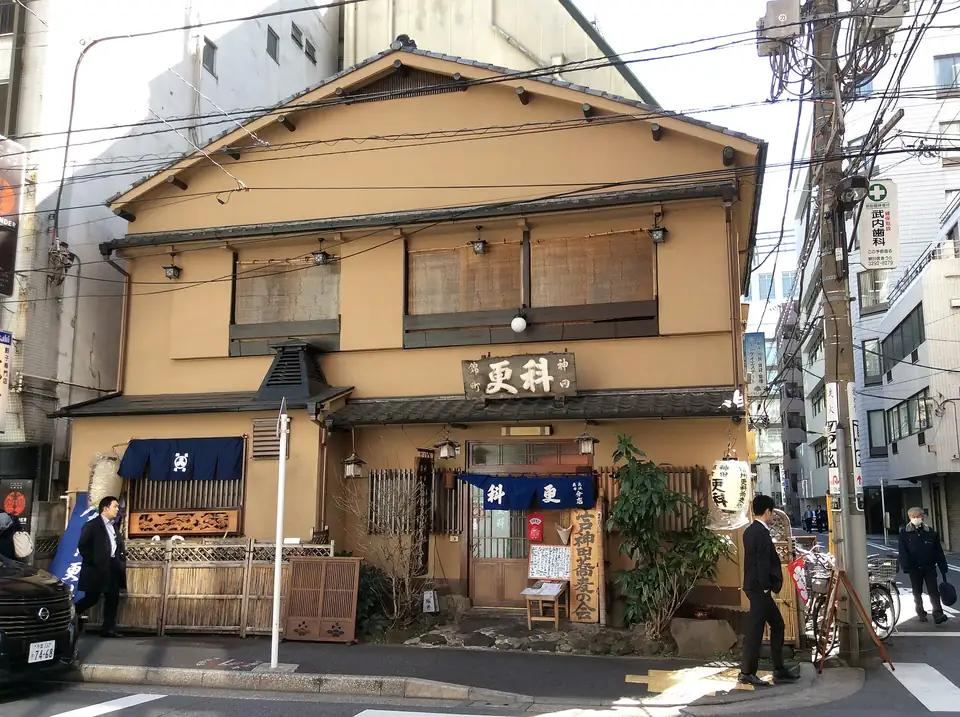 Est. 1869Kanda Nishikicho SarashinaChilled soba with ginger tempuraSee this shop →
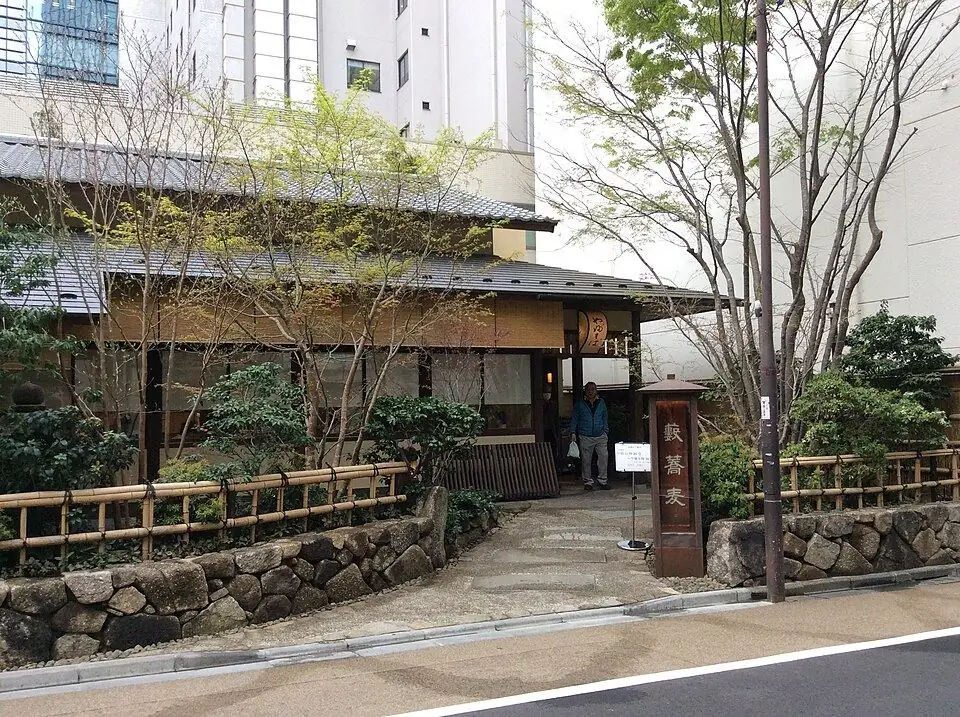 Est. 1880Kanda YabusobaSeiro sobaSee this shop →
Walks with these shops
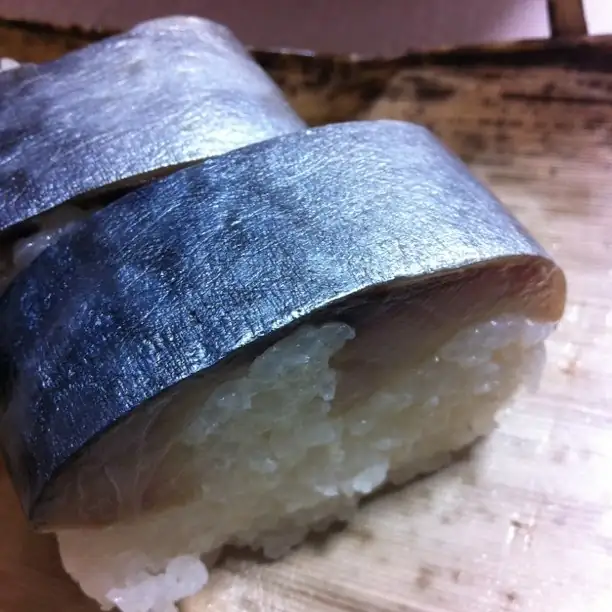 Central Kyoto4 shopsFrom Oike to Gion and Gojo: sweets, herring soba, mackerel sushi and fu.See the route
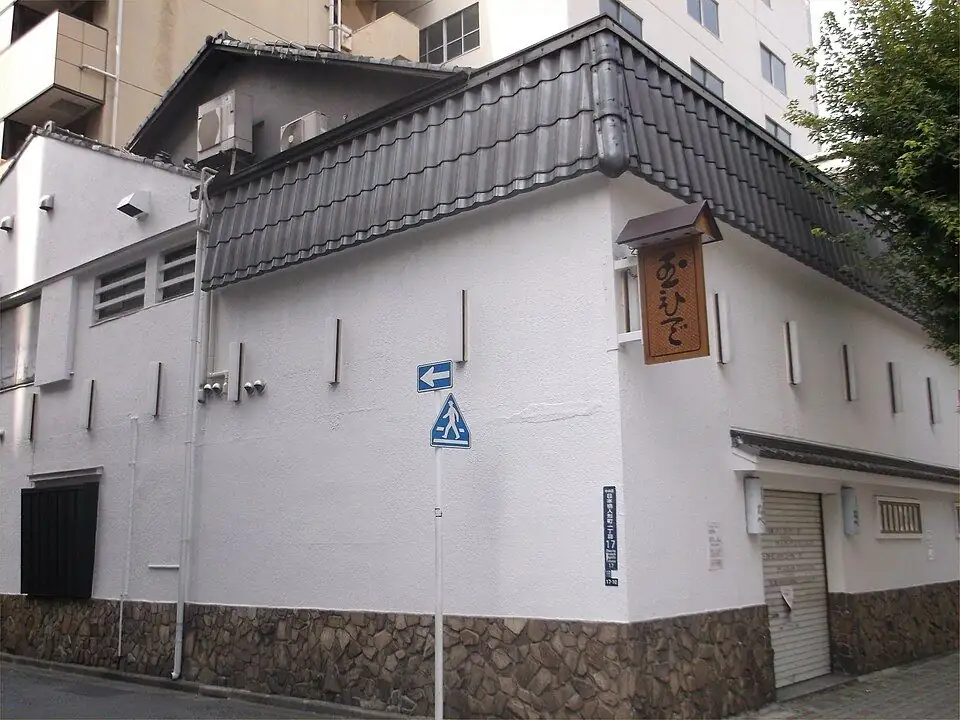 Nihonbashi & Ningyocho4 shopsFrom the old fish-market district to Ningyocho, via shops credited with ten-zaru, boxed bento, toro and oyakodon.See the route
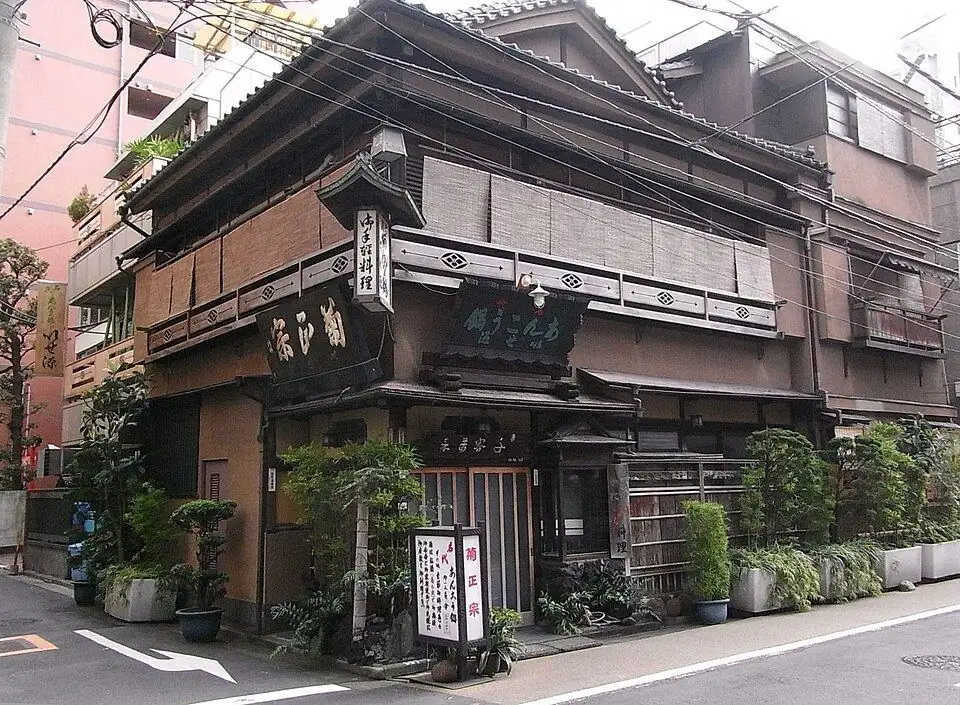 Old Kanda Renjakucho5 shopsA small corner spared by wartime fires, where soba, anglerfish pot and chicken sukiyaki houses stand side by side.See the route
Related origins
Sources
- 農林水産省「Let’s和ごはんプロジェクト 和ごはん×年越しそば」
- 総本家にしんそば・松葉「松葉とにしんそば」(公式)
- GLTJP「総本家にしんそば松葉」(店の確認済み情報)
- 本家 田毎「ごあいさつ」(公式)
- 本家 田毎「店舗のご案内」(公式)
- 京都観光Navi(京都市・京都市観光協会)「本家 田毎」
- GLTJP「室町砂場 日本橋本店」(店の確認済み情報)
- All About「室町砂場」
- ニッポン旅マガジン「神田錦町更科」
- 千代田区観光協会「神田錦町更科」
- 千代田区観光協会「かんだやぶそば」
- サライ.jp「かんだやぶそば」(『サライ』2023年9月号より)