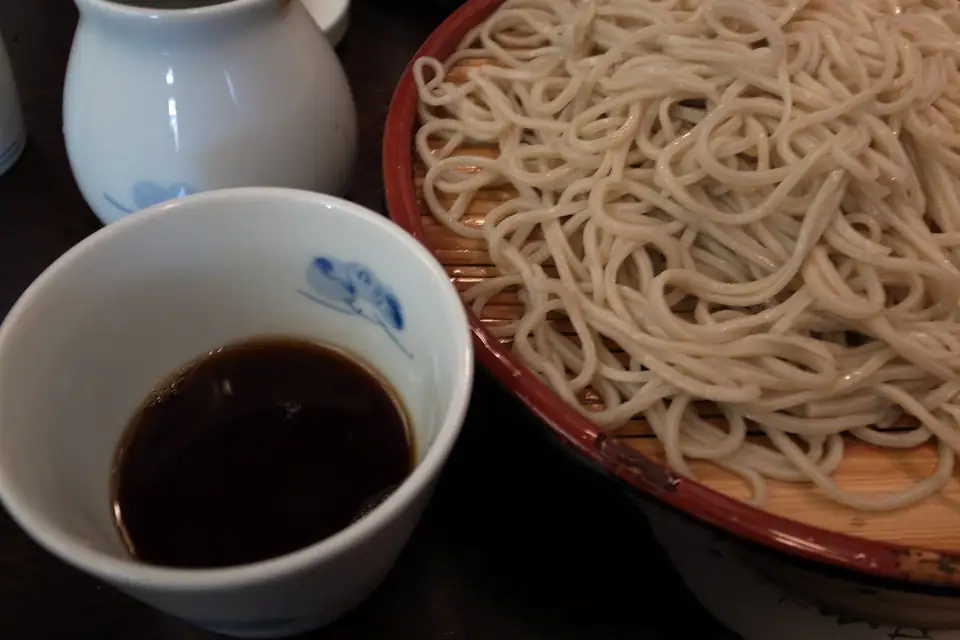
Kanda Matsuya (main shop)
In Japanese: 神田まつや 本店
Est. 1884
Kanda Matsuya is a handmade soba (buckwheat noodle) restaurant in Kanda Sudacho, Tokyo, open since 1884. Its two-story wooden building with a black tiled roof was rebuilt in 1925 and is a Tokyo Metropolitan Government Selected Historic Building. The noodles are made by hand from whole-grain buckwheat flour bound with egg and wheat flour, and the dipping sauce is fairly strong.
- What to try
- Mori sobasesame soba, tempura soba
- Address
- 1-13 Kanda-Sudacho, Chiyoda-ku, Tokyo
- Getting there
- About a 1-minute walk from Exit A3 of Awajicho Station (Tokyo Metro Marunouchi Line) or Ogawamachi Station (Toei Shinjuku Line)
- At the shop
- Eat inTake out
- Founded
- 1884
- Era
- Meiji era
- Food
- Soba
About Kanda Matsuya (main shop)
Fukushima Ichizo opened this soba restaurant in 1884, and the Fukushima family ran it for two generations. After the building burned in the Great Kanto Earthquake of 1923, Odaka Masakichi took over, and the Odaka family runs it today. In 2024 it was 140 years from its founding.3456
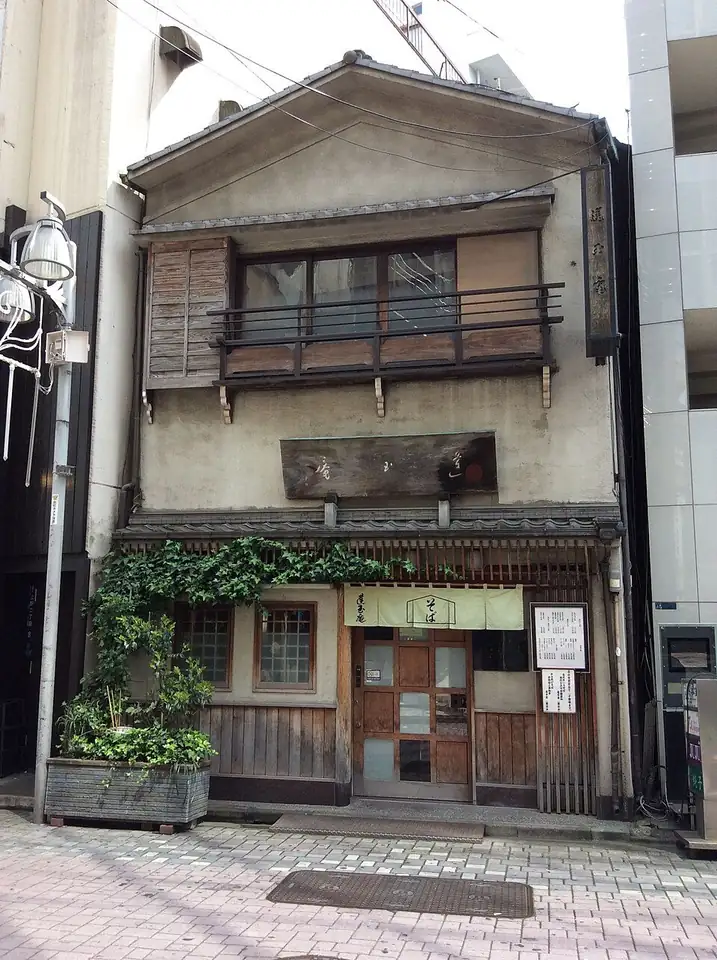
The two-story wooden building with a black tiled roof was rebuilt in 1925. In 2001 it was selected as a Tokyo historic building, together with nearby shops such as Isegen, Botan and Takemura. The front has two sliding doors: the right one is the entrance and the left one is the exit. Inside are tables, along with a cash register and a wall clock from the early Showa era.2345
The buckwheat comes from Hitachi Akisoba and from Hokkaido and Nagano. It is stone-ground whole, inner skin and all, then bound with egg and wheat flour and made by hand in the Edo style. After the war the shop switched to machine-made noodles for a time, but it returned to handmade soba in 1963. The dipping sauce is fairly strong, in the old downtown Tokyo style. Through a glass window at the back, you can watch the noodles being made.234
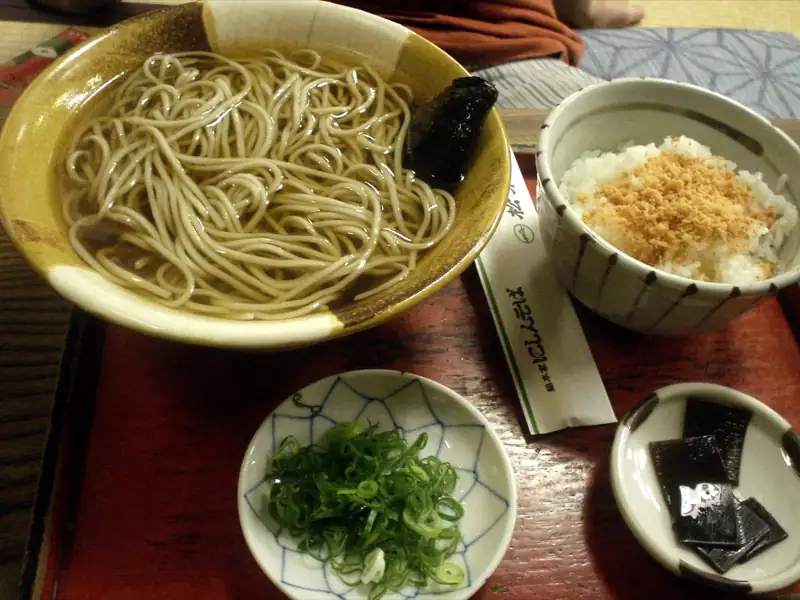
The menu includes mori soba, sesame soba, tempura soba topped with shrimp, hot kashiwa nanban soba with chicken, and sobagaki (buckwheat dumplings). Seasonal soba include sudachi citrus soba in summer and nameko mushroom seiro in autumn. It is about a 1-minute walk from Exit A3 of Awajicho Station (Tokyo Metro Marunouchi Line) or Ogawamachi Station (Toei Shinjuku Line).1234
History
Lineage
- Fukushima IchizoFounded 1884; two Fukushima generations
- Odaka Masakichi takes overAfter the 1923 earthquake
- Kanda MatsuyaRun by the Odaka family
Drawn only from what the sources state.
- 1884
Founded by Fukushima Ichizo.
- 1923
The building is lost in the Great Kanto Earthquake; Odaka Masakichi takes over the shop.
- 1925
The current two-story wooden building is rebuilt.
- 1963
Returns from machine-made to handmade noodles.
- 2001
The building is selected as a Tokyo historic building.
- 2024
Marks 140 years from its founding.
At the shop
Stories
Photos2 photos
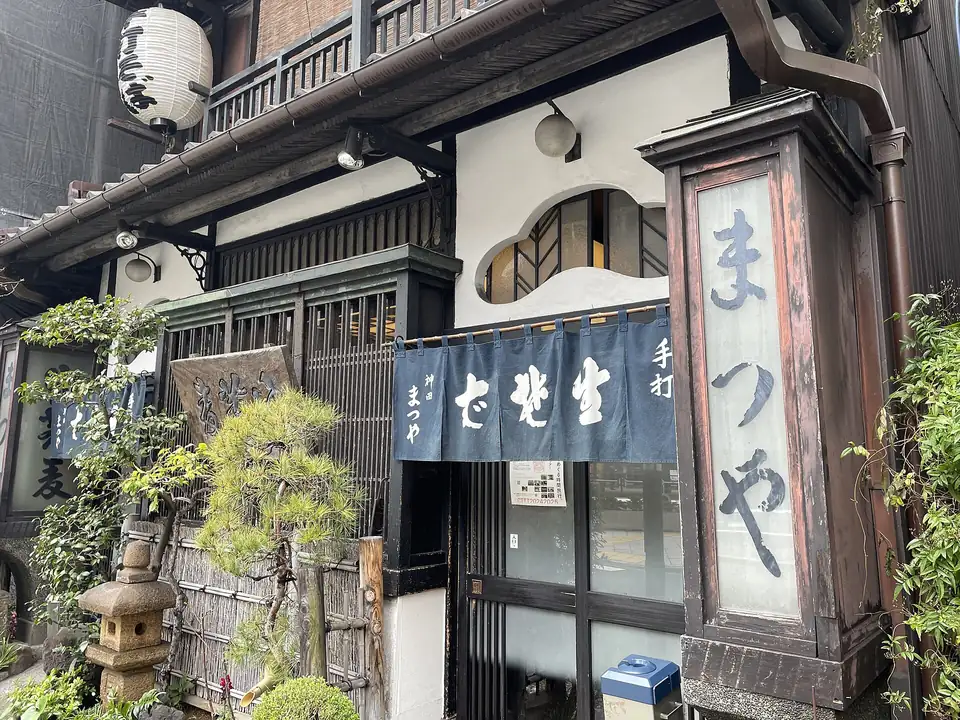
The shop front in SudachoPhoto: Higa4 · CC0 · Wikimedia Commons
Compiled by our editors from public sources. We warmly welcome corrections from the shop.
Walks including this shop
Nearby
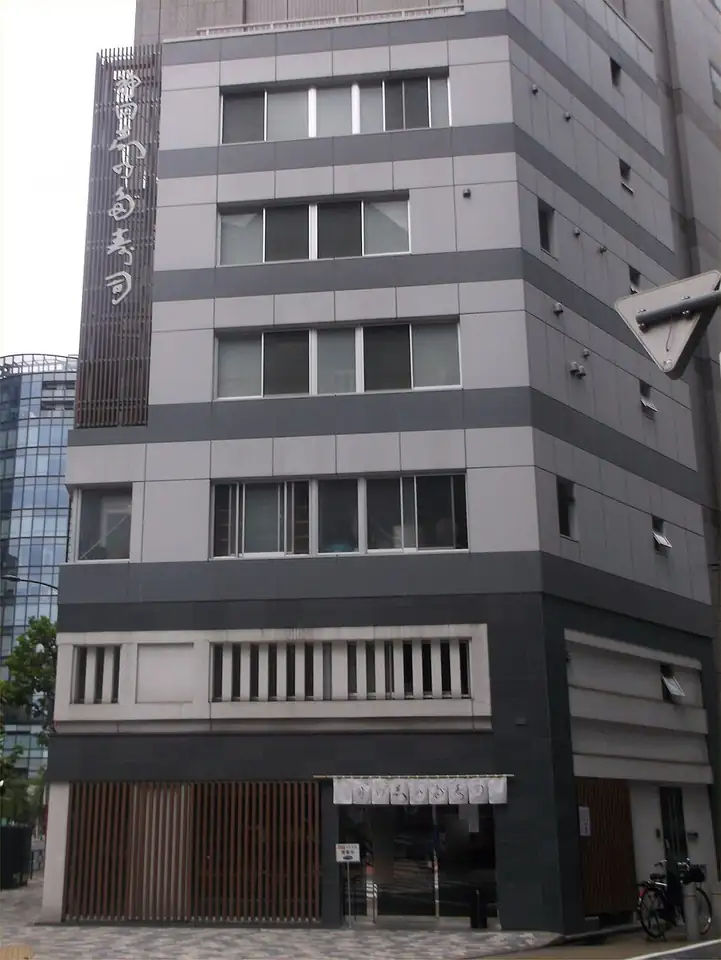
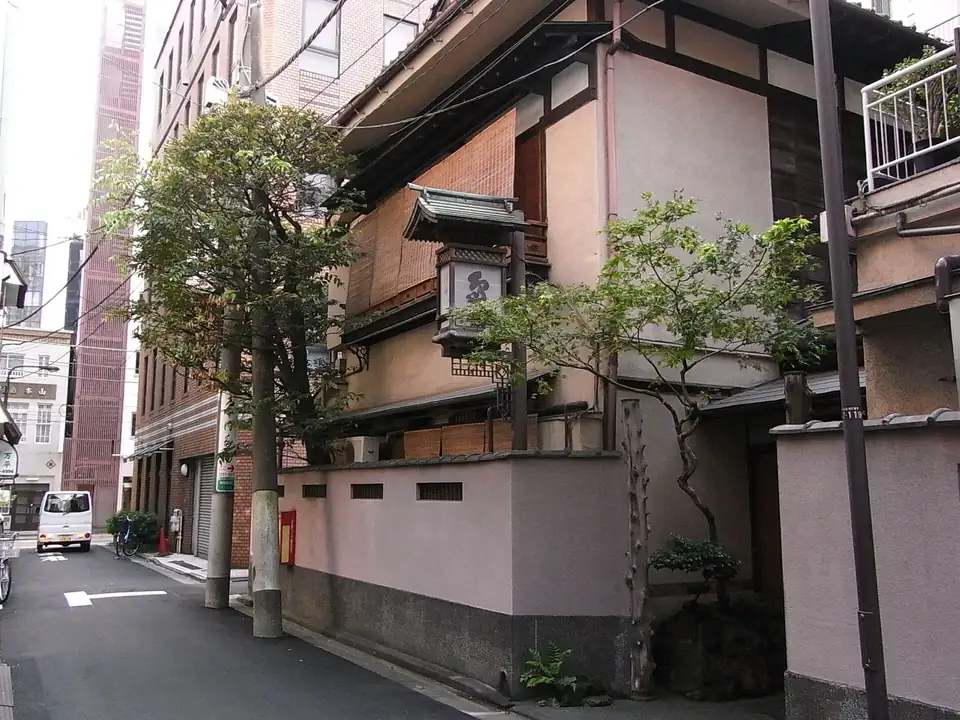
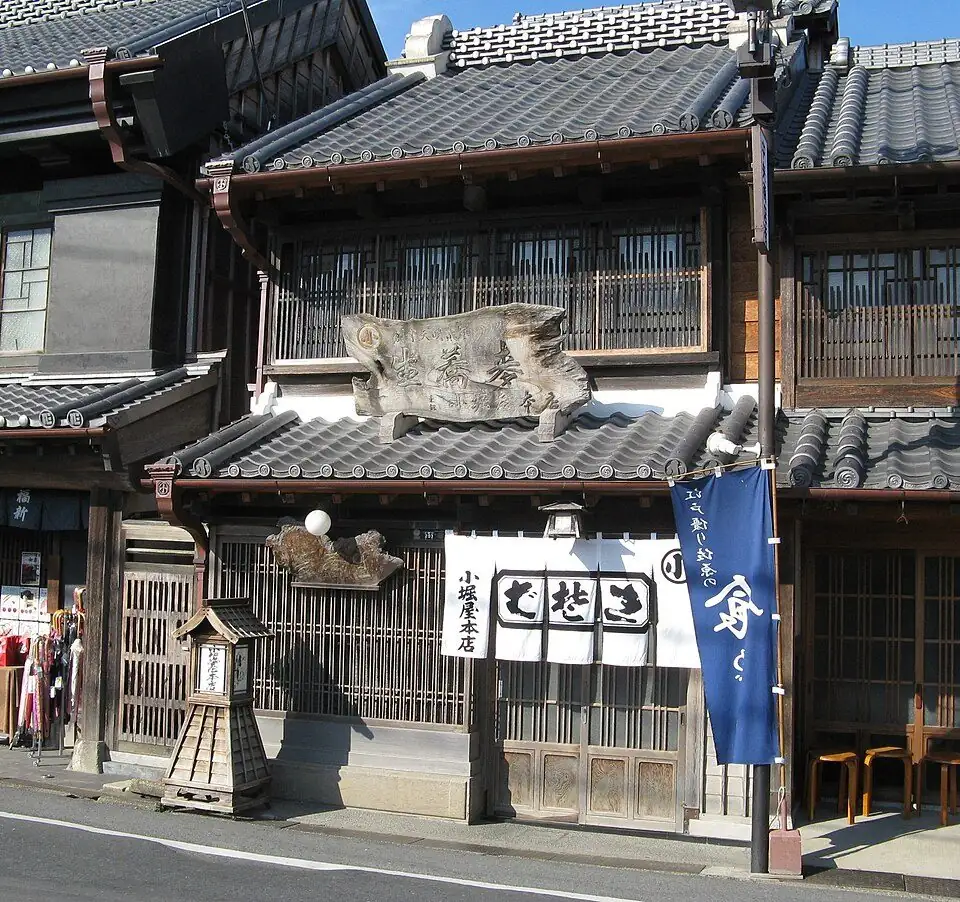
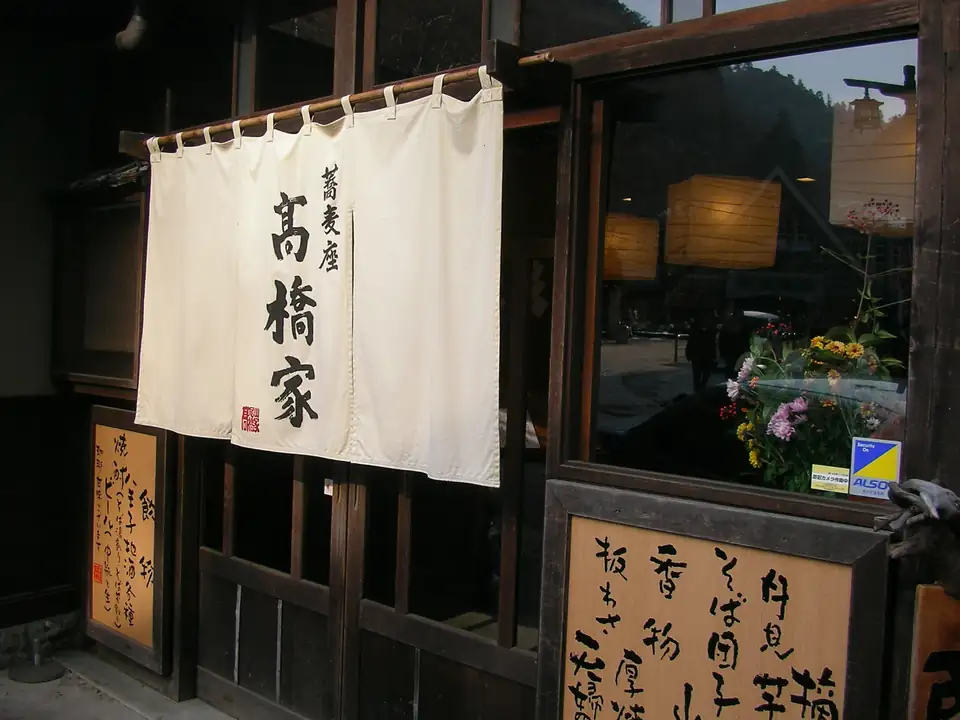
Same food
When this shop first opened
1884
142 years since.
- 1872Japan's first railway opens
- 1884Founded
- 1895Heian Shrine is founded
- 2026Today
Each event on the timeline is checked against a source.
See sources
1872: 港区「鉄道開業150年 港区と鉄道の夜明け」; 1895: 観光庁 多言語解説文データベース「平安神宮 概要」(平安神宮)