Hanbeifu (main shop)
In Japanese: 半兵衛麸 本店
Est. 1689
Hanbeifu is a fu (wheat gluten) maker at the southeast end of Gojo Bridge in Kyoto, open since 1689. According to the shop, the founder built the business on skills learned at the imperial court. Yuba (soy milk skin) was added in the Meiji era. A tearoom at the back serves mushiyashinai, a set of fu and yuba dishes, by reservation.
- What to try
- Nama-fubaked fu, yuba and the mushiyashinai meal
- Address
- 433 Shonin-cho, Higashiyama-ku, Kyoto
- Getting there
- About a 1-minute walk from Kiyomizu-Gojo Station (Keihan Line)
- At the shop
- Eat inTake out
- Founded
- 1689
- Era
- Edo period
- Food
- Pickles & tofu
About Hanbeifu (main shop)
In 1689 the founder, Tamaki Hanbei, opened a fu shop in Kyoto. According to the shop, he drew on skills learned at the imperial court. A Keihan Railway article says he learned fu-making at the Kyoto Imperial Palace and worked there as a cook. Around the Meiji era (1868–1912), the ninth head began making yuba at the request of temples.246
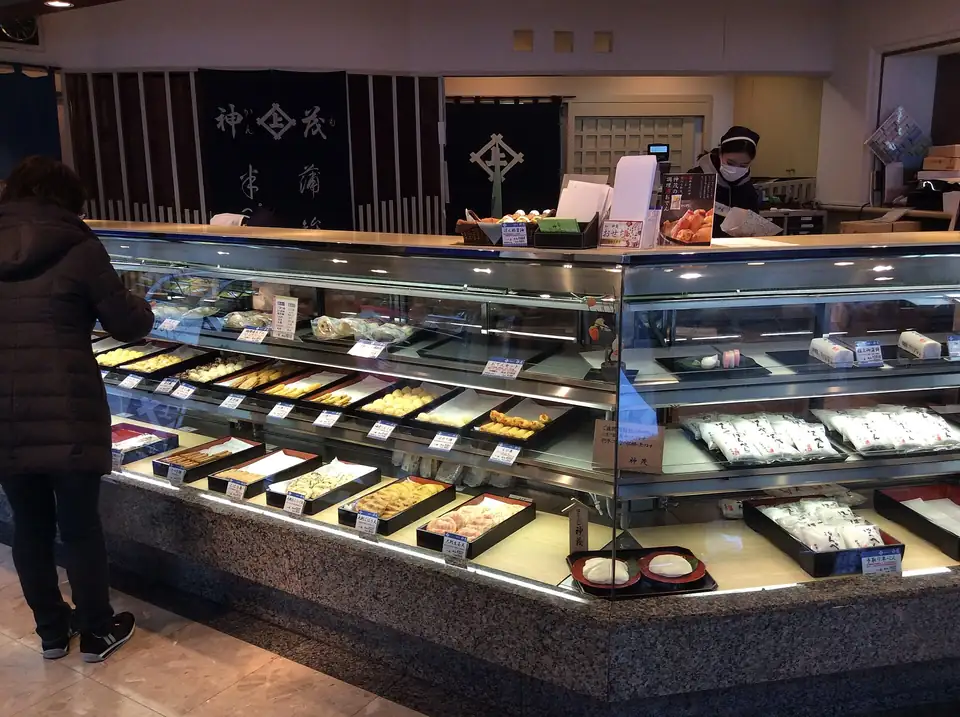
Fu is made from wheat gluten. Some kinds of nama-fu (fresh fu) are mixed with rice flour or millet and then steamed. Yakifu (baked fu) is baked in long sticks. Nama-fu shaped like seasonal flowers is sold for limited periods. During World War II the shop could not get wheat and refused black-market flour; it resumed making fu after the war.246
A Meiji-era townhouse, a Showa-era Western-style building and a Heisei-era office block stand linked together at the southeast corner of Gojo-dori and Kawabata-dori. The tearoom, Sabo Hanbei, serves only one meal, mushiyashinai, a Kyoto word for a light meal. It brings simmered, vinegared and fried fu and yuba dishes and a soup. The Bento Box Museum on the second floor of the Western-style building shows lunch boxes from the Edo to early Meiji periods, and it is free.567
It is about a 1-minute walk from Kiyomizu-Gojo Station on the Keihan Line. The tearoom needs a reservation. The main shop building also has a café, FuFuFu and, which serves sweets made with fu and yuba.3567
History
- 1689
Tamaki Hanbei opens a fu shop in Kyoto.
- 1950
A stone Western-style building, now part of the main shop, is built.
- 2019
The shop reaches 330 years from its founding.
At the shop
Compiled by our editors from public sources. We warmly welcome corrections from the shop.
For the shop: to send a correction or photos, please use this form.
Walks including this shop
Nearby
Same food
When this shop first opened
1689
337 years since.
- 1603The Edo shogunate begins
- 1689Founded
- 1774Kaitai Shinsho is published
- 2026Today
Each event on the timeline is checked against a source.
See sources
1603: 東京都都市整備局『東京の都市づくり通史』序章; 1774: 山口県文書館 解説資料「蘭学(解体新書)」