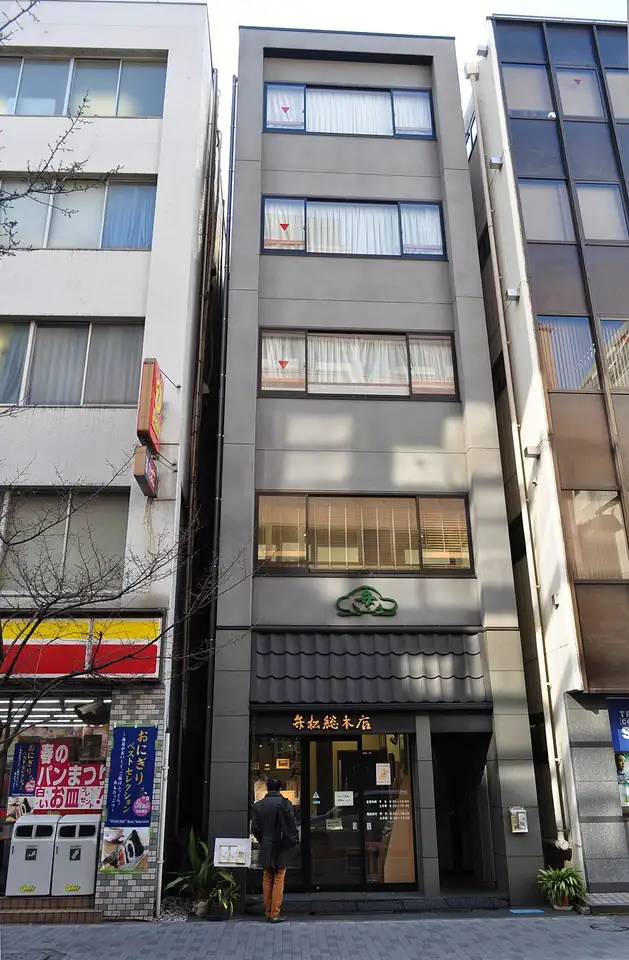
Nihonbashi Benmatsu Sohonten
In Japanese: 日本橋弁松総本店
Est. 1850
Nihonbashi Benmatsu Sohonten is a bento (boxed meal) shop in Nihonbashi-Muromachi, Tokyo, open since 1850. It grew from an eatery at the old fish market that wrapped leftovers for customers to take home. It keeps a sweet, strongly flavored style of seasoning and packs grilled fish, rolled omelet and simmered vegetables into wooden boxes.
- What to try
- Boxed bento such as Nami-roku
- Address
- 1-10-7 Nihonbashi-Muromachi, Chuo-ku, Tokyo
- Getting there
- Within walking distance of Mitsukoshimae Station (Tokyo Metro)
- At the shop
- Take out
- Founded
- 1850
- Era
- Edo period
- Food
- Bento & shumai
Dishes said to begin here
- Boxed bento
In 1810, the founder opened Higuchiya, an eatery at the Nihonbashi fish market.
More about Boxed bento →
About Nihonbashi Benmatsu Sohonten
In 1810, Higuchi Yoichi, born in Echigo Province, opened an eatery called Higuchiya at the Nihonbashi fish market. Wrapping unfinished food in wood shavings or bamboo sheath for customers to take home proved popular, and the second owner, Takejiro, began selling meals wrapped in bamboo sheath from the start. By the time of the third owner, Matsujiro, people called him Bento-ya no Matsujiro, shortened to Benmatsu. In 1850 the shop became a specialist in boxed meals.245
The seasoning is sweet and strong, as it has been since Edo times. Some say this helped the food keep, others that Edo townspeople liked bold flavors. Grilled fish, rolled omelet, kamaboko (steamed fish cake) and simmered vegetables are the staples, with sweet mame kinton (mashed sweet beans). The standard Nami-roku box holds teriyaki swordfish, rolled omelet and taro and shiitake simmered in a sweet broth.346
The owner starts work at the shop's factory near Eitaibashi Bridge in Koto-ku around 2 a.m. and moves to the Nihonbashi main shop in the morning. Rice and side dishes are cooled quickly to limit the time at room temperature and keep bacteria down. The boxes are made from thinned Ezo spruce from Hokkaido, wooden down to the base. The shop makes 1,200 to 1,500 boxes on weekdays and about 2,000 on weekends and holidays.3
The main shop is near Mitsukoshimae Station (Tokyo Metro). Some boxes, such as Nami-hachimaru, need a reservation, while Nami-roku can be bought without one.4
History
- 1810
Higuchi Yoichi opens the eatery Higuchiya at the Nihonbashi fish market.
- 1850
Founded as Benmatsu, a boxed-meal specialist.
At the shop
Photos2 photos
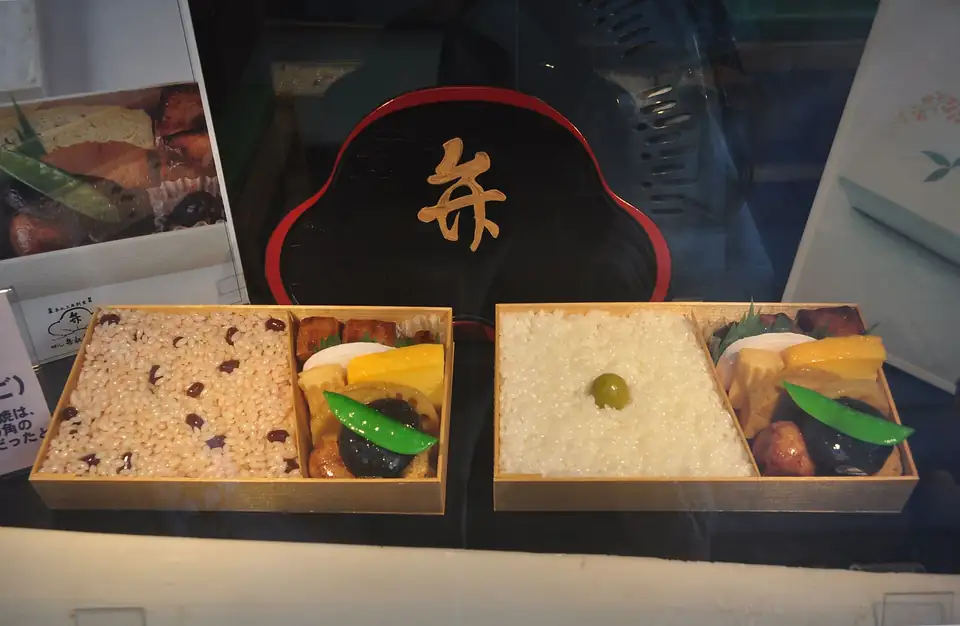
A boxed bentoPhoto: 江戸村のとくぞう · CC BY-SA 4.0 · Wikimedia Commons
Compiled by our editors from public sources. We warmly welcome corrections from the shop.
Walks including this shop
Nearby
Same food
When this shop first opened
1850
176 years since.
- 1802The first volume of Tokaidochu Hizakurige appears
- 1850Founded
- 1853Perry's ships arrive at Uraga
- 2026Today
Each event on the timeline is checked against a source.
See sources
1802: 静岡県立中央図書館「温故知新」十返舎一九と『膝栗毛』; 1853: 外務省「六月三日ヨリ十二日迄異国船進退之図」解説