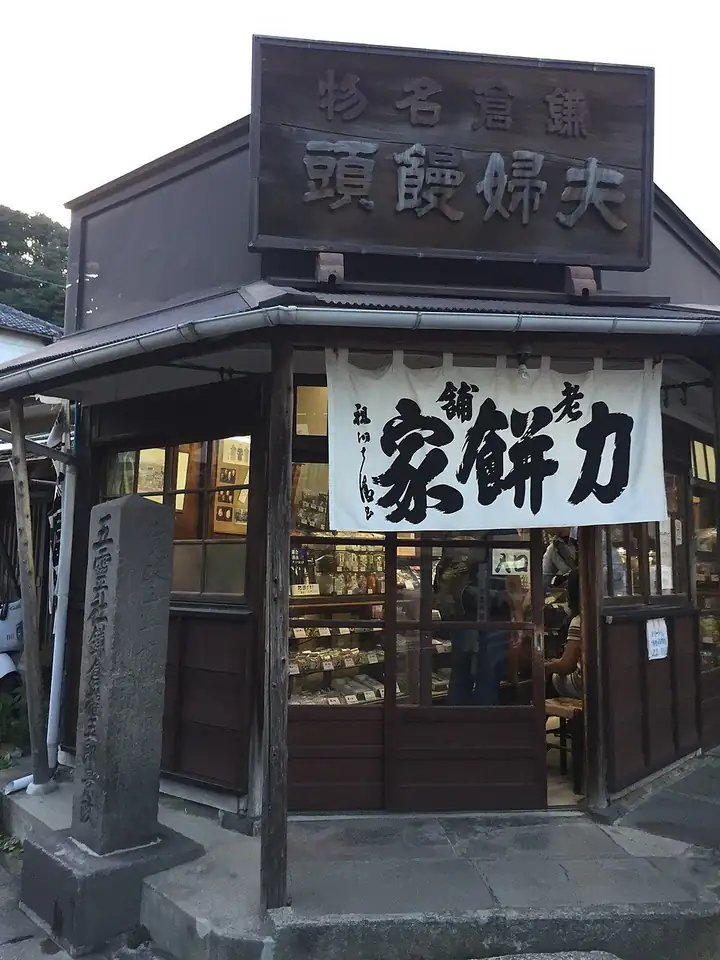
Chikaramochiya
In Japanese: 力餅家
Est. c. 1688
Chikaramochiya is a wagashi (traditional Japanese sweets) shop at the entrance to Goryo Shrine in Hase, Kamakura, said to date from the Genroku era (1688–1704). Its signature Gongoro chikaramochi is mochi (rice cake) pounded each morning and topped with smooth bean paste. Made without additives, it keeps only for the day.
- What to try
- Gongoro chikaramochigyuhi chikaramochi, fukumen manju
- Address
- 18-18 Sakanoshita, Kamakura, Kanagawa
- Getting there
- 6-minute walk from Hase Station (Enoden Line)
- At the shop
- Take out
- Founded
- c. 1688
- Era
- Edo period
- Food
- Wagashi
About Chikaramochiya
The shop is said to date from the Genroku era, and the ninth generation runs it today. According to the owner, more people began visiting Enoshima and Kamakura in the mid-Edo period, and the shop probably started as a teahouse for them. A letter from the Edo period found in northeastern Japan is said to mention chikaramochi as a souvenir of Kamakura.156
The name comes from Kamakura Gongoro Kagemasa, a late Heian-period (794–1185) warrior enshrined at nearby Goryo Shrine. The shrine keeps two heavy stones that his admirers are said to have used to test their strength. Mochi offered at the stones was shared among worshippers and came to be called Gongoro's strength mochi, and the shop's ancestors are said to have carried on the tradition.15
Gongoro chikaramochi is mochi pounded each morning and topped with smooth bean paste. With no additives, the mochi hardens by the next day, so it is meant to be eaten the same day. From February to April it is made as kusamochi with Japanese mugwort. There is also gyuhi chikaramochi, soft rice paste wrapped in bean paste, and fukumen manju, bean paste in a castella-like shell baked in custom molds shaped like the masks of the shrine's Menkake procession.2357
The shop collapsed in the 1923 Great Kanto Earthquake and was rebuilt, but near the end of the Pacific War it was torn down with the other buildings in the area on military orders. The present building dates from after the war. The lettering on the noren (the cloth curtain at the entrance) is by Hayashi Sodo, a calligrapher of the early Showa era. The old-fashioned display cases also hold suama, seasonal fresh sweets, rice crackers and karinto. It is about a 6-minute walk from Hase Station on the Enoden Line.125
History
- 1688
Said to have opened at the entrance to Goryo Shrine.
- 1923
The shop collapses in the Great Kanto Earthquake and is rebuilt.
At the shop
Compiled by our editors from public sources. We warmly welcome corrections from the shop.
Nearby
Same food
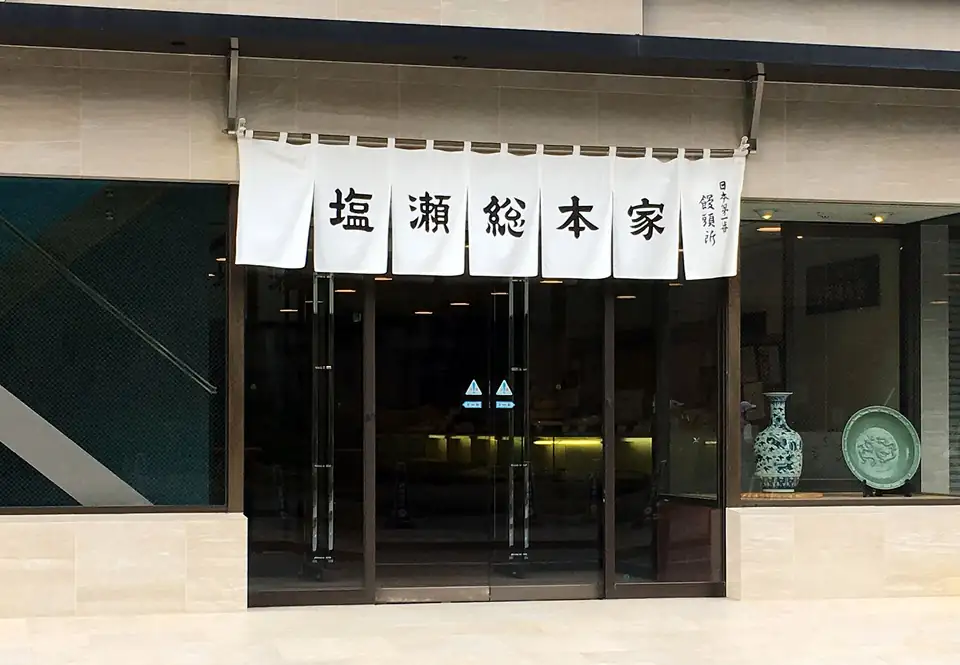 Est. c. 1349Shiose SohonkeShiose manju (steamed buns with yam and rice-flour dough)See this shop →
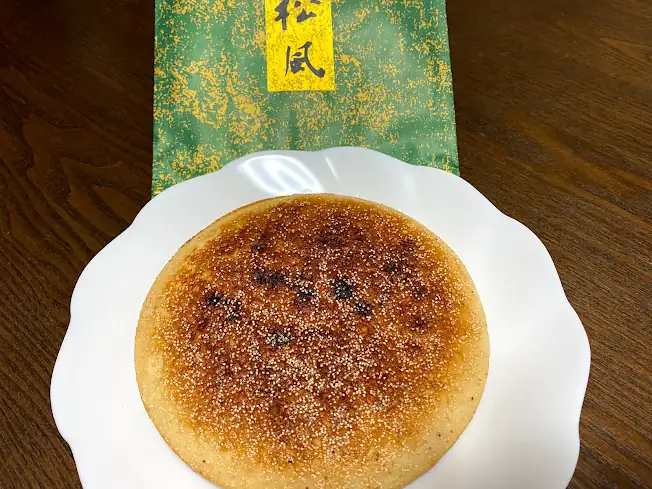 Est. c. 1421Kameya MutsuMatsukaze (baked miso cake)See this shop →
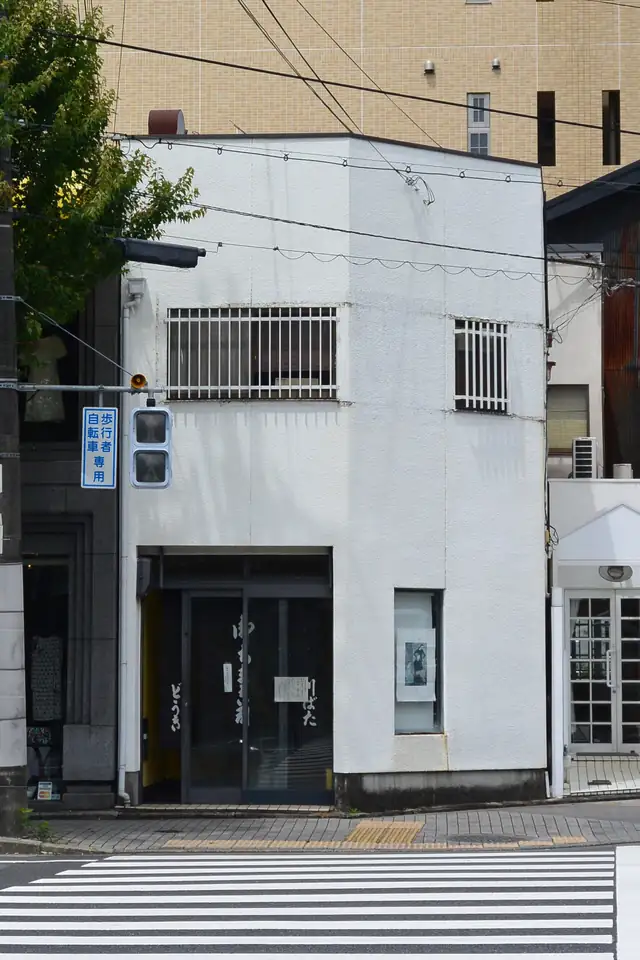 Est. 1503Kawabata DokiSuisen chimakiSee this shop →
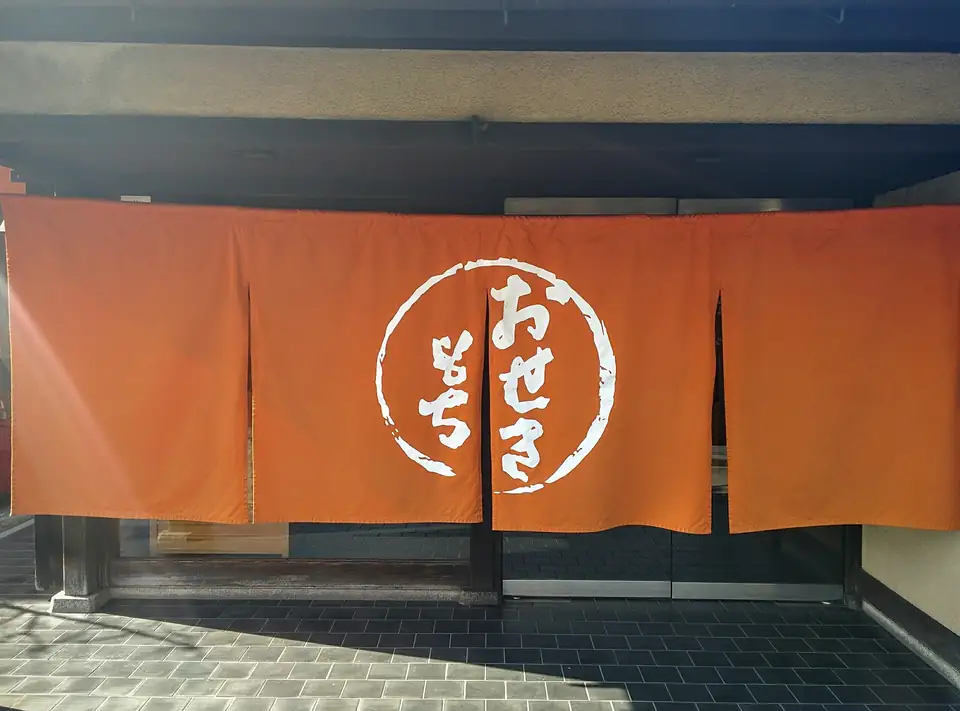 Est. c. 1569OsekimochiOseki mochi (plain and mugwort rice cakes topped with coarse bean paste)See this shop →
When this shop first opened
c. 1688
338 years since.
- 1603The Edo shogunate begins
- 1688Founded
- 1774Kaitai Shinsho is published
- 2026Today
Each event on the timeline is checked against a source.
See sources
1603: 東京都都市整備局『東京の都市づくり通史』序章; 1774: 山口県文書館 解説資料「蘭学(解体新書)」