Hirome Matsumaeya (kombu)
In Japanese: 比呂女 松前屋
Est. 1392
Hirome Matsumaeya is a kombu (kelp) shop on Kamanza-dori in central Kyoto, said to date from 1392. Tradition says Emperor Go-Kameyama gave the family its shop name. It sells hirome, strips of kelp once made as a sweet for the imperial palace, kiuhi kombu (sold in winter only) and Gosho no Hana, chopped kelp to go with chazuke.
- What to try
- Hirome kelp stripskiuhi kombu (October to March), Gosho no Hana
- Address
- 161 Masuya-cho, Kamanza-dori Marutamachi-sagaru, Nakagyo-ku, Kyoto
- Getting there
- About a 10-minute walk from Kyoto Gyoen National Garden
- At the shop
- Take out
- Founded
- 1392
- Era
- Kamakura–Muromachi period
- Food
- Pickles & tofu
About Hirome Matsumaeya (kombu)
The family traces itself to Kojima Bun’emon, who is said to have handled kelp for the Southern Court in the 14th century. The kelp came from Hokkaido by way of Tsuruga to Yoshino. After the Southern Court ended he moved to Kyoto and served the imperial family. The shop dates its founding to 1392, and tradition says Emperor Go-Kameyama gave it its name.3
In Kyoto the family supplied many goods to the palace, and because it handled kelp it also did some cooking work there. When the capital moved to Tokyo in the Meiji era (1868–1912), it stayed in Kyoto. From then on it began selling kelp to the public, which it had not done before.3
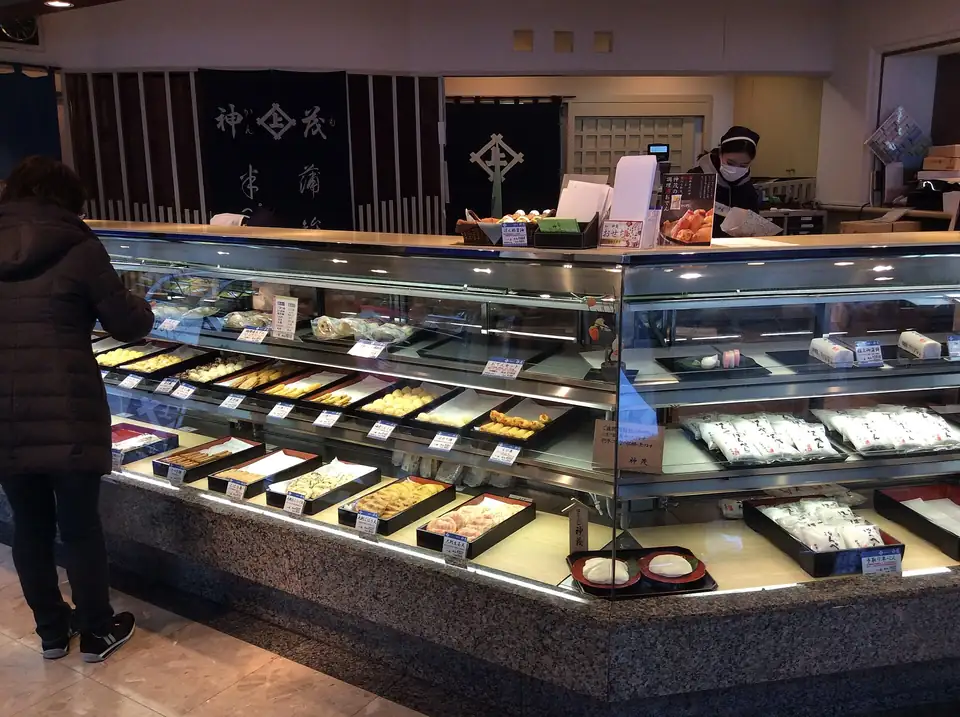
Hirome, first sold to the public in 1875, are strips of kelp once made as a dry sweet for the palace. Ma-kombu from southern Hokkaido is aged in a storehouse for five years, seasoned with vinegar and aged one more year. Kiuhi kombu, sold only from October to March, is kelp aged five years, softened and coated with sugar. Gosho no Hana is simmered kelp chopped fine to eat with chazuke (rice with tea poured over it).34
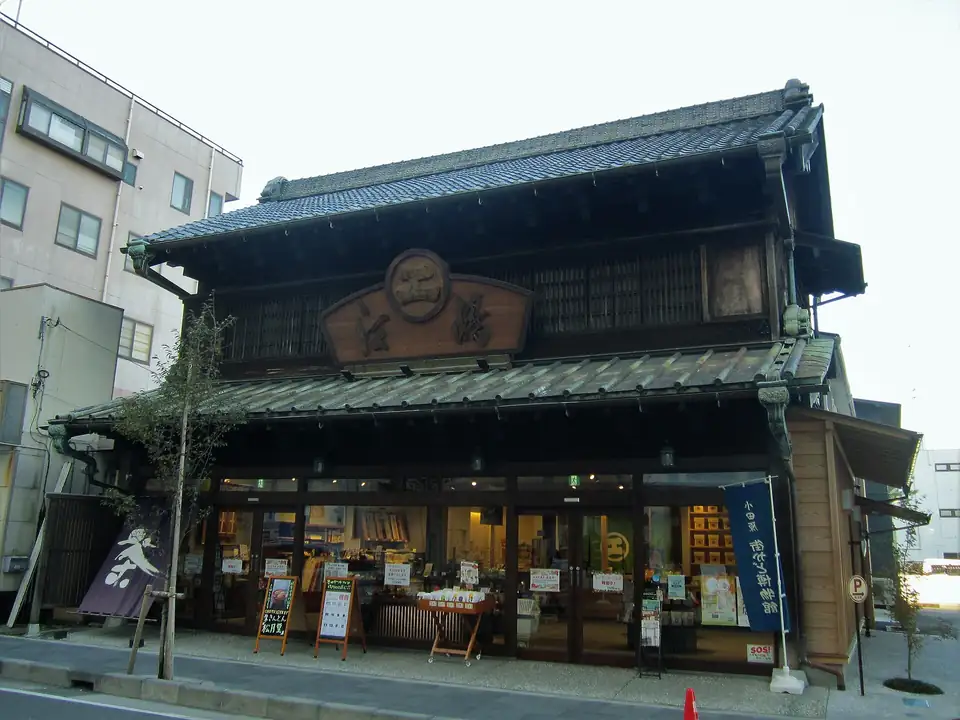
A noren (shop curtain) reading “Goyosho”, a supplier to the imperial household, hangs at the entrance. Inside, the amber-toned shop keeps a wooden plaque from the Imperial Household Ministry and other items. At the back is a small garden with a stone lantern. It is about a 10-minute walk from Kyoto Gyoen National Garden.3
History
- 1392
The shop dates its founding to this year. Tradition says Emperor Go-Kameyama names it.
- 1875
Begins selling hirome, the kelp sweet it once made for the palace.
At the shop
Compiled by our editors from public sources. We warmly welcome corrections from the shop.
For the shop: to send a correction or photos, please use this form.
Nearby
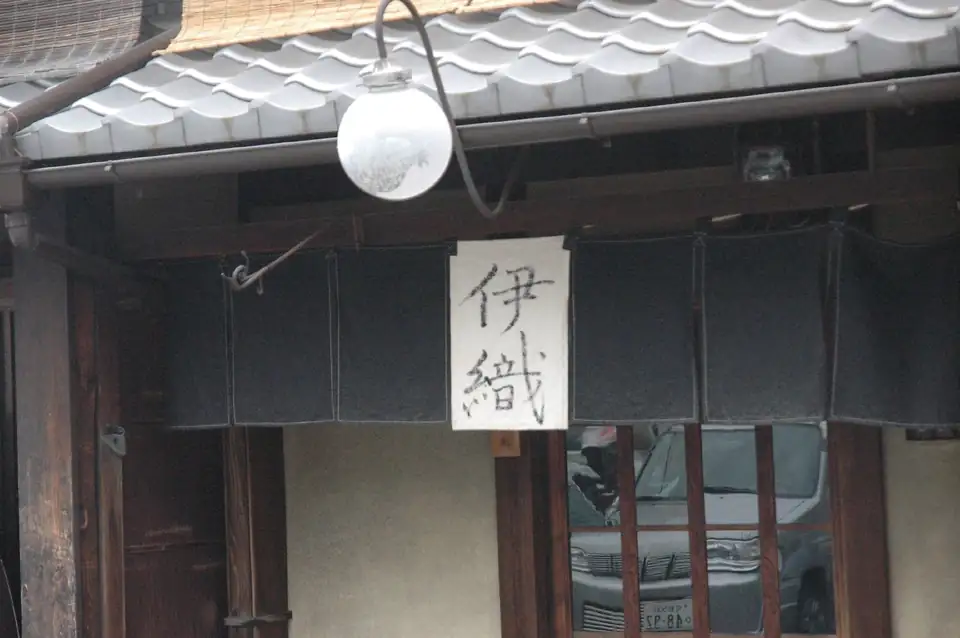 Est. c. 1624Kameya IoriHigashi dry sweets for the tea ceremony (aruheito sugar candySee this shop →
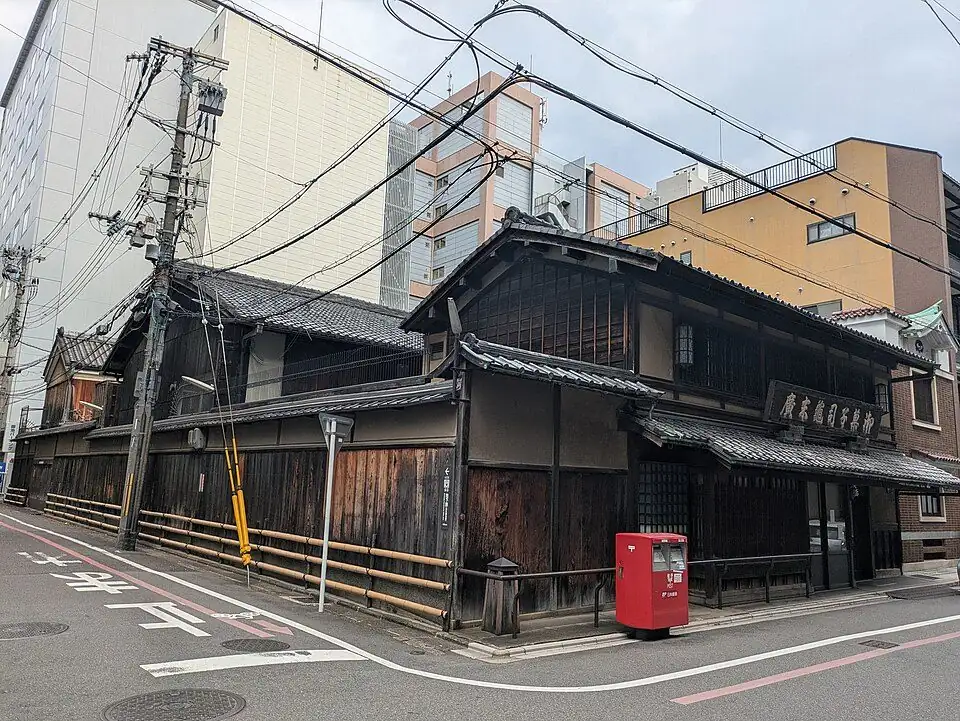 Est. 1804KamesuehiroKyo no yosuga (the “four-and-a-half-mat” box) and Kyo no junitsukiSee this shop →
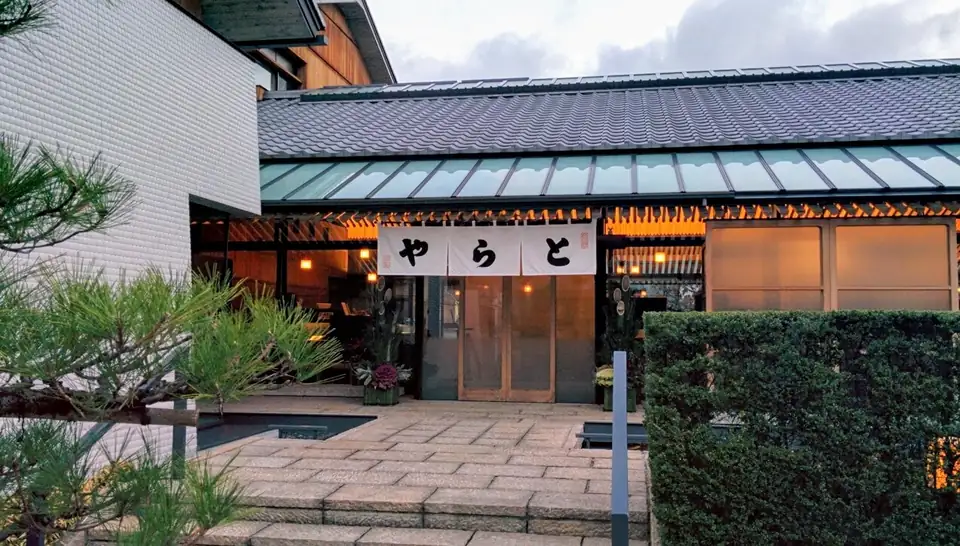 Est. c. 1586Toraya Kyoto Ichijo Store & Toraya Karyo Kyoto IchijoYoru no Ume yokanSee this shop →
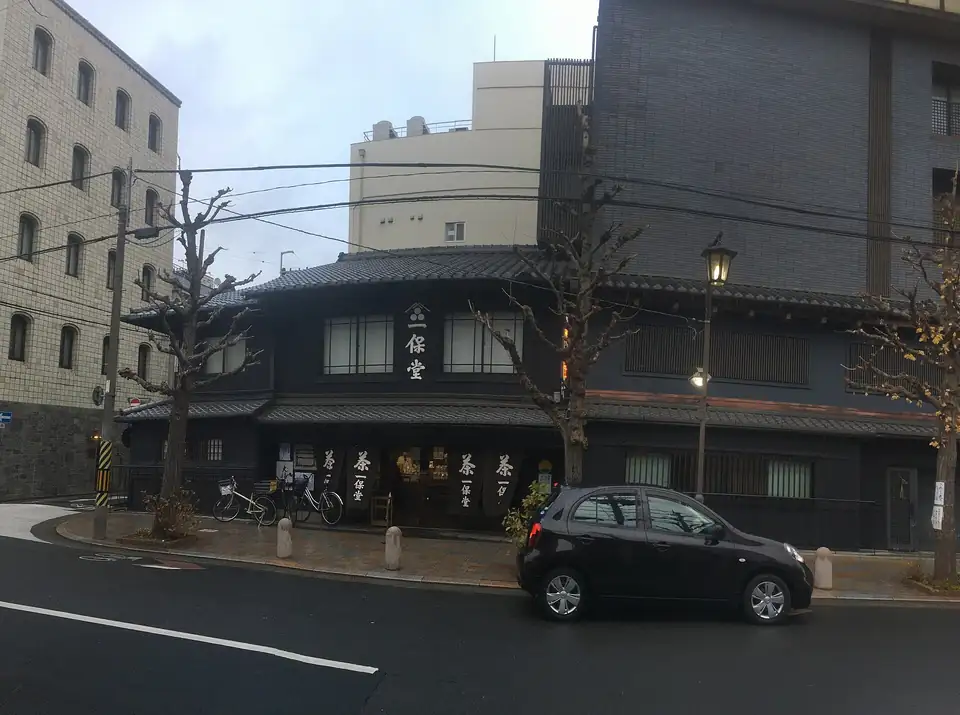 Est. 1717Ippodo Tea Kyoto (main shop)MatchaSee this shop →
Same food
When this shop first opened
1392
634 years since.
- 1053Byodo-in's Phoenix Hall is completed
- 1392Founded
- 1397Work begins on Kitayama-dono (Kinkaku-ji)
- 2026Today
Each event on the timeline is checked against a source.
See sources
1053: 観光庁 多言語解説文データベース「平等院の美術」(宗教法人 平等院); 1397: 京都市「鹿苑寺(金閣寺)周辺エリア」