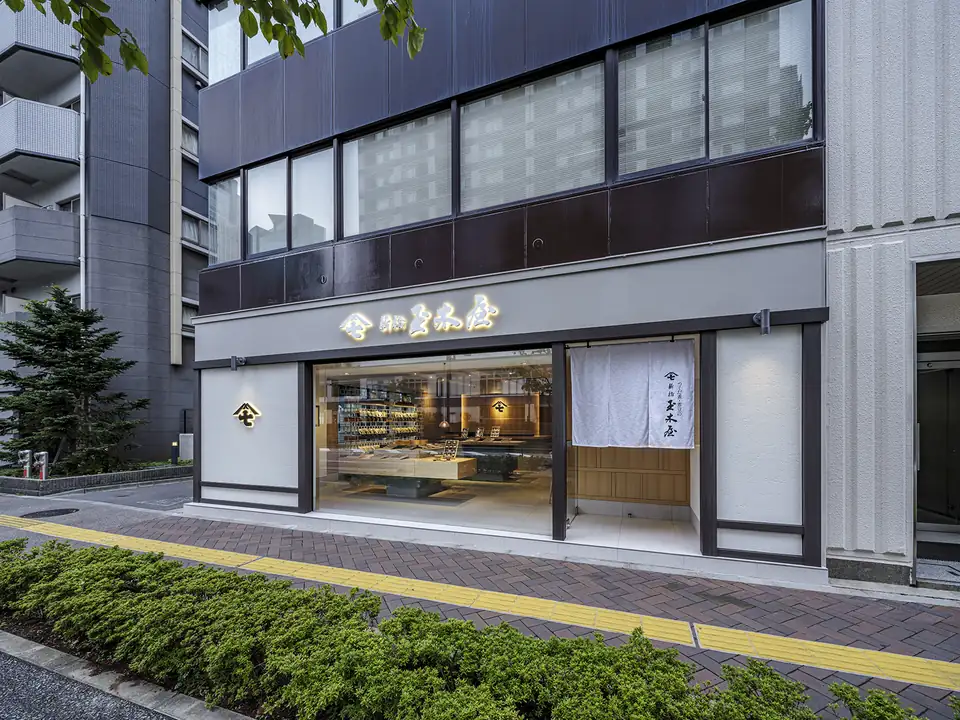
Shinbashi Tamakiya (main shop)
In Japanese: 新橋玉木屋 本店
Est. 1782
Shinbashi Tamakiya is a shop for tsukudani (small fish or seaweed simmered in soy and sugar) and simmered beans in Shinbashi, Tokyo, open since 1782. Its first specialty was zazen-mame, simmered black beans. The third-generation owner is said to have created its tsukudani after seeing Tsukudajima fishermen sell simmered small fish.
- What to try
- Zazen-mame(simmered black beans)tsukudani
- Address
- 4-25-4 Shinbashi, Minato-ku, Tokyo
- Getting there
- About a 6-minute walk from the Karasumori Exit of Shimbashi Station (JR)
- At the shop
- Take outEat in
- Founded
- 1782
- Era
- Edo period
- Food
- Pickles & tofu
About Shinbashi Tamakiya (main shop)
In 1782 a man named Shichibei came to Edo (now Tokyo) from Tamaki village in Echigo Province, now Niigata. He opened a shop in Katagawa-cho, today's Shinbashi, and named it Tamakiya after his home village. At first it was known for a family recipe of simmered black beans. According to the shop, the third-generation Shichibei created its tsukudani after seeing Tsukudajima fishermen sell small fish simmered in soy. The 10th generation runs the shop today.2345
Zazen-mame are flat black beans simmered in a simple way, a dish the founder knew from his home region. The name may come from monks eating the beans during zazen meditation, or from the beans’ shape, which resembles legs crossed for meditation. The beans appear in a late Edo period guide to the city’s specialties, and the writer Nagai Kafu mentioned Tamakiya’s beans in his diary.145
Each kind of tsukudani is cooked in its own sauce, which is topped up and reused from batch to batch. The company makes everything in its own factory, from cooking to sale, and uses no synthetic preservatives. The range includes clams, thinly cut kelp and cubes of bonito, as well as lower-salt versions. In the Meiji era (1868–1912), long lines of customers are said to have formed outside the shop at the end of each year.1345
The main shop moved to Shintora-dori Avenue in August 2022. It is mainly a retail shop, with a three-seat counter in one corner. The counter serves chazuke (rice with broth poured over it) and rice ball sets topped with tsukudani. Since 2023 it has also offered a course that pairs tsukudani dishes with wine. The shop is about a 6-minute walk from the Karasumori Exit of Shimbashi Station (JR).1346
History
- 1782
Opens in Katagawa-cho in Edo, today’s Shinbashi.
- 2022
In August, the main shop moves to Shintora-dori Avenue.
- 2023
Starts a course pairing tsukudani dishes with wine.
At the shop
Photos2 photos
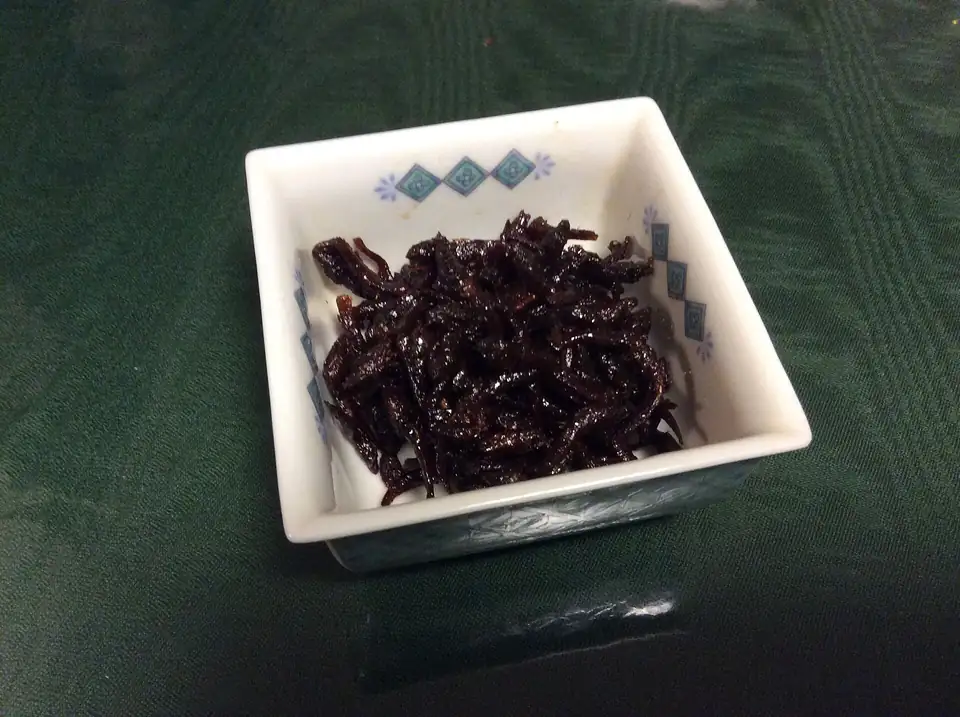
Tsukudani from TamakiyaPhoto: 江戸村のとくぞう · CC BY-SA 4.0 · Wikimedia Commons
Compiled by our editors from public sources. We warmly welcome corrections from the shop.
Nearby
Same food
When this shop first opened
1782
244 years since.
- 1774Kaitai Shinsho is published
- 1782Founded
- 1802The first volume of Tokaidochu Hizakurige appears
- 2026Today
Each event on the timeline is checked against a source.
See sources
1774: 山口県文書館 解説資料「蘭学(解体新書)」; 1802: 静岡県立中央図書館「温故知新」十返舎一九と『膝栗毛』