Nabedana Nabeya Gengoemon, Narita Monzen Shop
In Japanese: 鍋店 鍋屋源五右衛門 成田門前店
Est. 1689
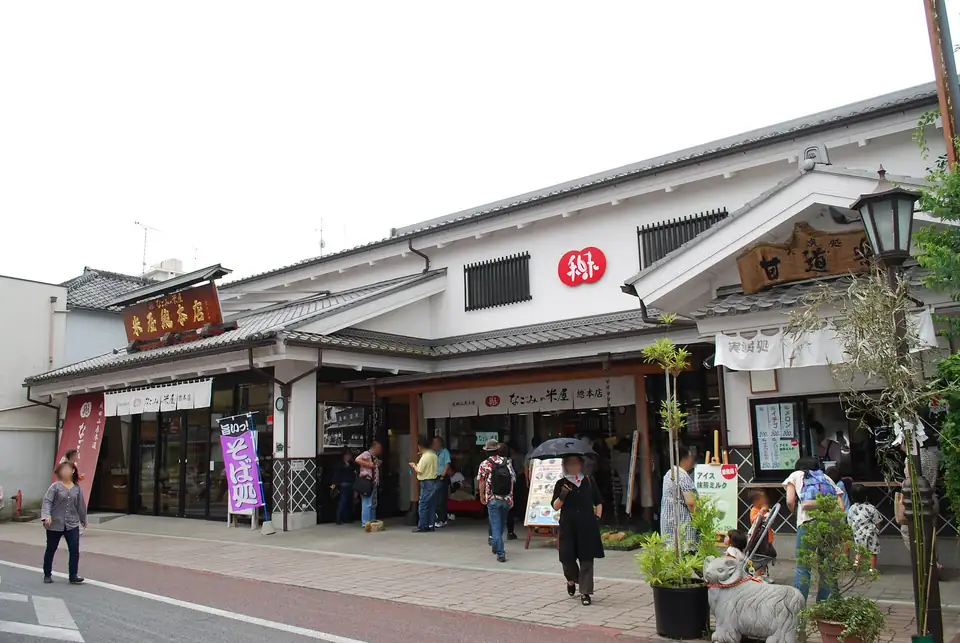
Nabeya Gengoemon is the shop of the Nabedana brewery in front of the main gate of Naritasan Shinshoji Temple, where the company began brewing in 1689. Set in a converted 1922 storehouse of solid hinoki cypress, it sells the full Jinyu range and Fudo sake, now brewed in Kozaki, with tastings. Amazake and sake buns are also sold.
- What to try
- Jinyu and Fudo sakeamazake
- Address
- 338 Honcho, Narita, Chiba
- Getting there
- 20-minute walk from Narita Station (JR, Keisei)
- At the shop
- Take out
- Founded
- 1689
- Era
- Edo period
- Food
- Sake brewery
About Nabedana Nabeya Gengoemon, Narita Monzen Shop
In 1689, in the time of the fifth shogun Tsunayoshi, the Sakura domain granted the family a license to brew 1,050 koku of sake, and it began brewing at the gate of Naritasan Shinshoji Temple. Its first brand was Horaisan. The trade name Nabedana is said to come from the nabeza, one of the Edo-period guilds like the gold and silver mints.145
In the Tenmei era (1781–1789), when Naritasan held temple exhibitions in Edo and pilgrims increased, the brewery grew to 1,000 koku. Between the Meiji and Taisho eras it opened branch breweries in Kozaki, Uozaki in Hyogo and elsewhere, and in 1942, under wartime consolidation orders, it gathered production at the Kozaki brewery, chosen for its good water. All its sake is now brewed in Kozaki.46
The name Jinyu comes from a family precept that people should live with benevolence and courage. Fudo, launched in 2004 for specialty liquor shops, is not charcoal-filtered, and even its pasteurized sake is heated only once, when bottled. The brewery is also known for using a lot of rice grown in Chiba.146
The Narita Monzen shop is a converted storehouse of solid hinoki cypress built in 1922; look up and you can see beams made by fitting curved timbers together. It carries Fudo and the full Jinyu range, and you can taste before you buy. It also sells the brewery's amazake (a sweet, non-alcoholic rice drink), hot in winter and chilled or frozen in summer, steamed sake buns in winter and other sweets, and a hand-grilled rice cracker shop shares the space.5789
History
- 1689
Receives a brewing license from the Sakura domain and begins brewing at the gate of Naritasan.
- 1922
The hinoki storehouse that now houses the Narita Monzen shop is built.
- 1942
Closes its other breweries under wartime orders and gathers production in Kozaki.
- 2004
Launches Fudo for specialty liquor shops.
At the shop
Compiled by our editors from public sources. We warmly welcome corrections from the shop.
For the shop: to send a correction or photos, please use this form.
Nearby
Same food
When this shop first opened
1689
337 years since.
- 1603The Edo shogunate begins
- 1689Founded
- 1774Kaitai Shinsho is published
- 2026Today
Each event on the timeline is checked against a source.
See sources
1603: 東京都都市整備局『東京の都市づくり通史』序章; 1774: 山口県文書館 解説資料「蘭学(解体新書)」